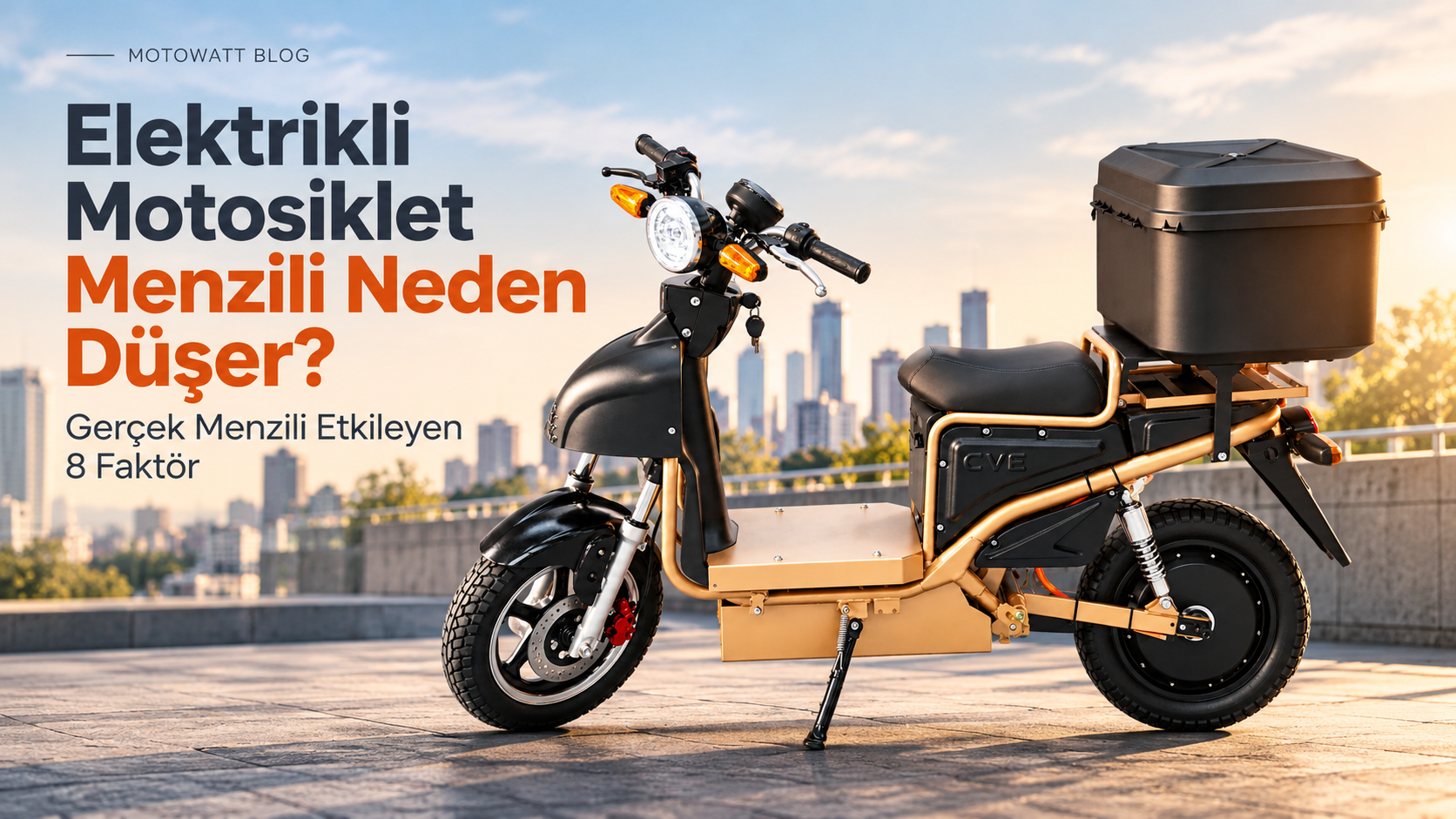
Why Does Electric Motorcycle Range Drop? 8 Factors That Affect Real-World Range
Why does your electric motorcycle travel fewer kilometres than expected? Explore eight factors affecting real-world range, including speed, temperature, rider weight, road conditions, tyre pressure and battery health, plus practical tips for more efficient riding.
Range is one of the most important considerations when choosing an electric motorcycle. The distance you can travel on a single charge matters for daily commuting, delivery services and longer journeys.
However, the range advertised in a motorcycle's specifications may differ from the distance achieved in everyday riding.
So, why does electric motorcycle range drop? Why can the same motorcycle travel farther on one day than another?
In this guide, we explain eight factors that affect real-world electric motorcycle range and share practical ways to improve riding efficiency.
What Is Electric Motorcycle Range?
Electric motorcycle range refers to the distance a vehicle can travel using a given amount of battery energy. It is commonly expressed as the distance achievable on a full charge.
Two important factors determine range:
-
Usable battery energy: The amount of energy available for riding.
-
Energy consumption: The amount of energy the motorcycle uses per kilometre.
Two motorcycles with the same battery capacity may achieve different ranges because their energy consumption differs.
Similarly, the same motorcycle may achieve different ranges under different riding conditions.
Why Is Real-World Range Different from Advertised Range?
Manufacturers may publish range figures measured under specific testing conditions.
These conditions can include defined speeds, temperatures, loads, road profiles and testing procedures.
Everyday riding introduces additional variables, such as traffic, acceleration habits, weather and terrain.
As a result, an advertised range figure should not be interpreted as a guaranteed distance for every journey.
When comparing motorcycles, it is useful to understand the conditions and testing method behind the published range figure.
8 Factors That Affect Electric Motorcycle Range
1. Riding Speed
Speed is one of the most important factors influencing electric motorcycle energy consumption.
As speed increases, aerodynamic drag becomes more significant. Riding at sustained high speeds can require considerably more energy to cover the same distance.
Consequently, a motorcycle ridden continuously at high speed may achieve less range than the same motorcycle ridden at a moderate, steady speed.
Tip: Maintain a consistent speed appropriate for the road and traffic conditions. Never compromise safety to extend range.
2. Rapid Acceleration and Aggressive Riding
Electric motors can deliver quick acceleration, but repeated hard acceleration can increase energy consumption.
Frequent rapid starts and abrupt braking may reduce efficiency, particularly in stop-and-go traffic.
Smooth acceleration and anticipating traffic conditions can help manage energy use.
Some electric motorcycles also feature regenerative braking, which recovers part of the energy during deceleration.
However, regenerative braking is not available on every model and cannot recover all the energy used during acceleration.
3. Temperature and Cold Weather
Battery performance is affected by temperature.
In cold conditions, the battery's usable energy and power delivery characteristics may change, potentially reducing riding range.
Extreme heat can also affect battery performance and long-term battery health.
The size of these effects depends on battery chemistry, temperature and vehicle design.
Tip: Follow the manufacturer's operating and charging temperature recommendations. Allow additional range margin when planning journeys in cold weather.
4. Rider Weight and Cargo Load
Increasing the total weight carried by a motorcycle can increase the energy required for acceleration and uphill riding.
This is particularly relevant for delivery motorcycles.
Cargo boxes, packages, passengers and additional equipment can all contribute to total load.
Tip: Avoid unnecessary cargo and never exceed the manufacturer's maximum permitted load.
5. Hills and Road Conditions
Riding uphill requires additional energy to overcome gravity.
Therefore, a flat route and a route with significant elevation gain may produce different energy consumption figures, even when their distances are identical.
Poor road surfaces can also affect rolling resistance and riding efficiency.
Some motorcycles can recover a portion of energy when descending through regenerative braking, but this does not fully compensate for the energy required to climb.
6. Tyre Pressure and Maintenance
Tyres inflated below the manufacturer's recommended pressure can increase rolling resistance.
Higher rolling resistance may require the motorcycle to consume more energy to travel the same distance.
Brake drag, drivetrain maintenance issues and unsuitable tyres may also affect efficiency.
Tip: Check tyre pressure regularly and follow the motorcycle manufacturer's recommendations. Do not overinflate tyres in an attempt to increase range.
7. Wind and Weather Conditions
Strong headwinds increase the resistance a motorcycle must overcome, potentially raising energy consumption.
Changes in wind direction and strength can help explain why range differs between journeys on the same route.
Rain and poor road conditions can also influence riding speed, traction and route choices.
Tip: Allow extra range margin in windy or adverse weather, and always prioritize safe riding.
8. Battery Health and Usable Capacity
Electric motorcycle batteries can gradually lose capacity through aging and use.
As usable battery capacity decreases, the distance available at a given energy consumption rate may also decline.
However, a reduction in range does not necessarily mean the battery is worn out.
Temperature, riding style, tyre condition and route characteristics should also be considered.
For more information, read our guide on Electric Motorcycle Battery Lifespan.
Electric Motorcycle Range: Factors at a Glance
| Factor | Condition That May Reduce Range | More Efficient Approach |
|---|---|---|
| Speed | Sustained high speeds | Steady, appropriate speed |
| Acceleration | Frequent hard acceleration | Smooth acceleration |
| Temperature | Extreme cold | Temperature-aware planning |
| Load | Heavy or unnecessary cargo | Appropriate load management |
| Terrain | Steep hills and rough roads | Route planning |
| Tyres | Underinflated tyres | Manufacturer-recommended pressure |
| Wind | Strong headwinds | Additional range margin |
| Battery | Reduced usable capacity | Battery health monitoring |
These are general trends. Their actual impact varies by motorcycle model and operating conditions.
How Is Electric Motorcycle Range Calculated?
A simplified range estimate can be calculated using usable battery energy and average energy consumption.
Estimated range (km) = Usable battery energy (kWh) ÷ Energy consumption (kWh/100 km) × 100
For example, consider a hypothetical electric motorcycle with:
-
Usable battery energy: 4 kWh
-
Average energy consumption: 5 kWh/100 km
The estimated range would be:
4 ÷ 5 × 100 = 80 km
This is an illustrative calculation, not a tested or guaranteed range figure for any Motowatt motorcycle.
Real-world energy consumption varies, and nominal battery capacity may differ from the energy available for riding.
How Can You Improve Electric Motorcycle Range?
Several riding and maintenance habits may help improve efficiency:
-
Avoid unnecessary hard acceleration.
-
Maintain a steady speed appropriate for conditions.
-
Check tyre pressure regularly.
-
Avoid carrying unnecessary weight.
-
Keep up with scheduled maintenance.
-
Consider temperature and wind conditions.
-
Plan routes in advance.
-
Follow the manufacturer's battery and charging recommendations.
If your motorcycle has an economy riding mode, using it as instructed by the manufacturer may also help reduce energy consumption.
Range Planning for Electric Delivery Motorcycles
Delivery riding presents a distinctive operating profile.
Frequent stops, changing routes and cargo loads can influence energy consumption throughout the day.
For this reason, advertised range alone should not determine whether an electric motorcycle is suitable for delivery work.
Operators should consider:
-
Average daily distance
-
Delivery frequency
-
Typical cargo weight
-
Route elevation
-
Weather conditions
-
Charging opportunities
-
Additional range margin for unexpected journeys
Careful planning helps match a motorcycle's capabilities to actual operating requirements.
What Should You Do If Range Suddenly Drops?
If your electric motorcycle experiences an unexpected and significant reduction in range, first consider whether operating conditions have changed.
Ask yourself:
-
Has the temperature dropped considerably?
-
Has your route or riding speed changed?
-
Are you carrying more weight?
-
Is tyre pressure correct?
-
Is the battery charging normally?
-
Are there warning messages on the display?
A substantial range reduction that continues under similar conditions may require a professional inspection of the battery or other vehicle components.
Safety warning: If you notice battery overheating, unusual odours, swelling, smoke or serious electrical faults, stop riding and charging. Move to a safe distance and seek appropriate professional assistance.
Discover Motowatt Electric Motorcycles
When choosing an electric motorcycle, consider battery capacity, range, carrying capacity and intended use together.
Explore Motowatt electric motorcycles to compare options for commuting and delivery applications.
Frequently Asked Questions
Why does electric motorcycle range decrease?
Range may decrease due to high speeds, aggressive acceleration, cold weather, heavy loads, hills, low tyre pressure or reduced usable battery capacity.
Do electric motorcycles have less range in cold weather?
They can. Cold temperatures affect battery behaviour and usable energy. The impact depends on the motorcycle and environmental conditions.
Does riding faster reduce electric motorcycle range?
Generally, yes. Higher speeds increase aerodynamic drag and may significantly increase energy consumption.
Does tyre pressure affect electric motorcycle range?
Yes. Underinflated tyres can increase rolling resistance. Always follow the manufacturer's recommended pressure.
Does electric motorcycle range decrease over time?
It can, as batteries gradually lose usable capacity. However, not every range reduction is caused by battery aging.
Is advertised range guaranteed?
No. Advertised range figures are based on specified testing conditions. Actual range depends on how and where the motorcycle is used.
What is the best way to improve electric motorcycle range?
Smooth riding, appropriate tyre pressure, regular maintenance, avoiding unnecessary weight and careful route planning can all contribute to improved efficiency.