How Long Does an Electric Motorcycle Battery Last? Lifespan and Replacement Guide
How long does an electric motorcycle battery last? Discover the factors that affect battery lifespan, charging cycles, capacity degradation, replacement considerations and practical maintenance tips. Use the Motowatt Battery Lifespan Estimator to explore a theoretical estimate based on your riding habits.
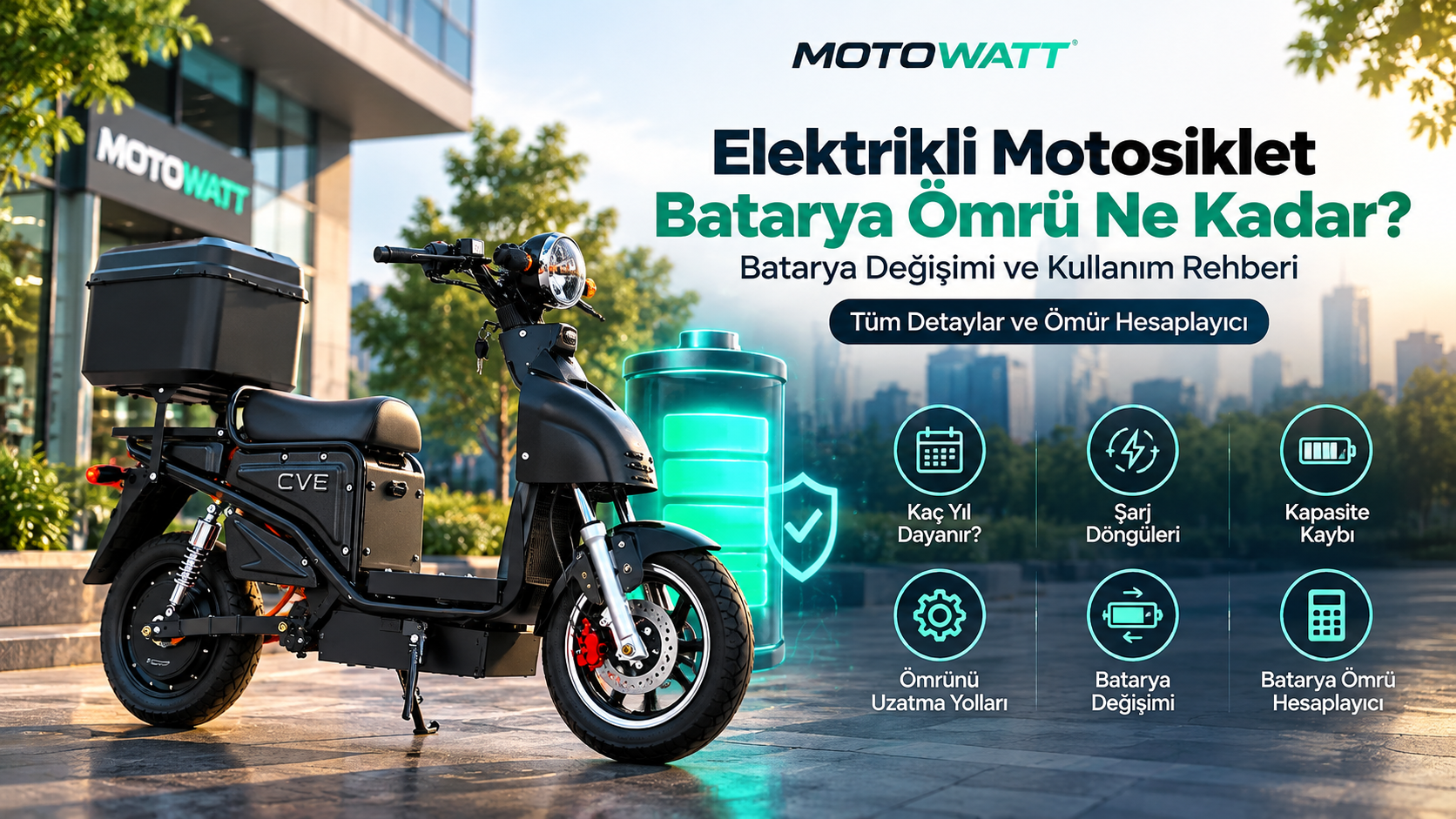
Battery lifespan is one of the most important considerations when buying an electric motorcycle. How many years can an electric motorcycle battery last? Does its capacity decrease over time? And when might battery replacement become necessary?
Electric motorcycle batteries directly influence riding range, performance, and long-term ownership costs. Proper use and suitable charging habits can help maintain battery performance over time.
In this guide, we explain electric motorcycle battery lifespan, charging cycles, capacity degradation, replacement considerations, and practical ways to help extend battery life.
How Many Years Does an Electric Motorcycle Battery Last?
The lifespan of an electric motorcycle battery depends on its chemistry, manufacturing quality, charging cycles, temperature exposure, and operating conditions.
Many lithium-ion batteries can operate for hundreds or thousands of charging cycles under suitable conditions. However, there is no single lifespan figure that applies to every battery.
Battery aging is generally considered in two ways:
-
Calendar aging: Capacity loss that occurs over time, even when the battery is not heavily used.
-
Cycle aging: Capacity loss associated with charging and discharging.
This means a battery can gradually age even if the motorcycle is rarely ridden.
For an accurate assessment, always consider the manufacturer's specified cycle life, capacity retention criteria, and warranty conditions.
How Many Charging Cycles Can an Electric Motorcycle Battery Handle?
A charging cycle represents the use and replenishment of energy equivalent to the battery's full capacity.
For example, using 50% of the battery capacity twice corresponds to approximately one equivalent full cycle.
Lithium-ion battery cycle life varies considerably depending on cell chemistry, battery design, and operating conditions.
Some batteries may reach a specified level of capacity degradation after several hundred cycles, while others are designed for substantially longer cycle life.
Important: Reaching a specified cycle count does not necessarily mean the battery stops working. Cycle-life ratings usually refer to the point at which the battery retains a defined percentage of its original capacity.
What Types of Batteries Are Used in Electric Motorcycles?
Different battery technologies may be used in electric motorcycles.
| Battery Type | General Characteristics | Key Considerations |
|---|---|---|
| Lithium-ion | High energy density and widespread use | Temperature and charging management matter |
| LFP (Lithium Iron Phosphate) | Often offers long cycle life and good thermal stability | May have lower energy density than some alternatives |
| Lead-acid | Found in some older or lower-cost systems | Heavier and generally shorter cycle life |
Battery chemistry alone does not determine overall quality. Cell quality, the battery management system (BMS), pack design, and operating conditions also play important roles.
Why Does Battery Capacity Decrease Over Time?
Electric motorcycle batteries gradually undergo chemical aging, which can reduce the amount of usable energy they store.
Factors that may accelerate capacity loss include:
-
Prolonged exposure to high temperatures
-
Frequent deep discharging
-
Extended storage at very high or very low charge levels
-
Charging outside the battery's supported conditions
-
Heavy usage and high energy demand
-
Improper storage conditions
As usable capacity decreases, the motorcycle's range on a single charge may also decline.
How Can You Extend Electric Motorcycle Battery Life?
Appropriate usage and charging habits can help preserve battery health.
1. Follow the Manufacturer's Charging Instructions
Use the recommended charger and follow the manufacturer's charging procedures.
2. Avoid Extreme Temperatures
Try to avoid leaving the battery in excessively hot environments for extended periods. Parking in direct sunlight for long periods may be undesirable, particularly in hot weather.
3. Avoid Unnecessary Deep Discharging
Repeatedly draining a battery to very low charge levels can accelerate aging in some battery systems.
4. Store the Battery at the Recommended Charge Level
If the motorcycle will not be used for an extended period, follow the manufacturer's storage charge recommendations.
5. Have the Battery and Charging System Inspected
If you notice charging errors, unusual heat, or unexpected range loss, contact an authorized service provider.
Electric Motorcycle Battery Lifespan Estimator
Daily riding distance and energy consumption can help estimate how quickly a battery accumulates equivalent full charging cycles.
The Motowatt Battery Lifespan Estimator uses battery capacity, daily distance, average energy consumption, and an assumed cycle-life rating to calculate a theoretical estimate.
Note: This estimate considers cycle usage only. Calendar aging, temperature, charging habits, and battery chemistry can significantly affect actual lifespan. The result is not a warranty or a guaranteed replacement date.
When Should an Electric Motorcycle Battery Be Replaced?
There is no universal replacement age or mileage that applies to every electric motorcycle.
Battery replacement may be considered when:
-
Usable range no longer meets daily riding needs
-
Battery health falls below manufacturer-defined limits
-
Charging system faults occur repeatedly
-
An authorized service provider identifies battery cell or pack issues
A reduction in battery capacity does not always mean immediate replacement is necessary.
Replacement decisions should be based on manufacturer specifications and professional inspection.
How Much Does Electric Motorcycle Battery Replacement Cost?
Battery replacement costs depend on the motorcycle model and the design of its battery system.
Important pricing factors include:
-
Battery capacity (kWh)
-
Cell chemistry and quality
-
Battery pack design
-
Battery management system and electronic components
-
Labour and service charges
-
Warranty coverage
-
Replacement part availability
Because these factors vary, it is not possible to provide one reliable replacement price for all electric motorcycles.
Contact the manufacturer or an authorized service provider for current prices and compatibility information.
How Does Battery Degradation Affect Motorcycle Range?
As usable battery capacity decreases, riding range may also decline under otherwise similar conditions.
For example, if a hypothetical motorcycle originally offered 100 km of range and its battery now retains 80% of its initial capacity, its theoretical range could be approximately 80 km, assuming all other factors remain unchanged.
Actual range also depends on riding speed, rider weight, temperature, terrain, tyre pressure, and other conditions.
Why Does Battery Lifespan Matter for Delivery Motorcycles?
Delivery motorcycles may experience much more intensive use than personal commuting vehicles.
Higher daily mileage can result in more frequent energy consumption and charging.
For this reason, delivery riders and fleet operators should consider battery cycle life, warranty conditions, service support, and long-term operating costs alongside initial riding range.
For more information, explore our guide on What to Look for When Buying an Electric Delivery Scooter.
Discover Motowatt Electric Motorcycle Models
When choosing an electric motorcycle, it is important to evaluate battery capacity, riding range, charging time, performance, and intended use together.
Explore Motowatt electric motorcycle models and compare their specifications to find an option that suits your commuting or professional delivery requirements.
Explore Motowatt Electric Motorcycle Models
Frequently Asked Questions
How many years does an electric motorcycle battery last?
Battery lifespan depends on battery technology, usage intensity, charging habits, and environmental conditions. Refer to manufacturer specifications for model-specific information.
Can I charge my electric motorcycle every day?
Daily charging is possible when needed, but the appropriate charging method and limits should follow the manufacturer's instructions.
Will an electric motorcycle still work after its battery loses capacity?
In many cases, a battery with reduced capacity can continue operating, although riding range may decrease. Safety-related faults require separate professional assessment.
Can an electric motorcycle battery be repaired?
Some battery systems may support manufacturer-approved servicing. Unauthorized battery pack repairs can create serious safety risks and should be avoided.
What is the best way to preserve electric motorcycle battery health?
Following recommended charging practices, avoiding extreme temperatures, storing the battery appropriately, and complying with manufacturer maintenance instructions can help preserve battery health.