What to Look for When Buying an Electric Delivery Scooter
Planning to buy an electric delivery scooter? Discover the key factors to consider, including battery range, charging time, payload capacity, motor performance, maintenance requirements and overall operating costs.
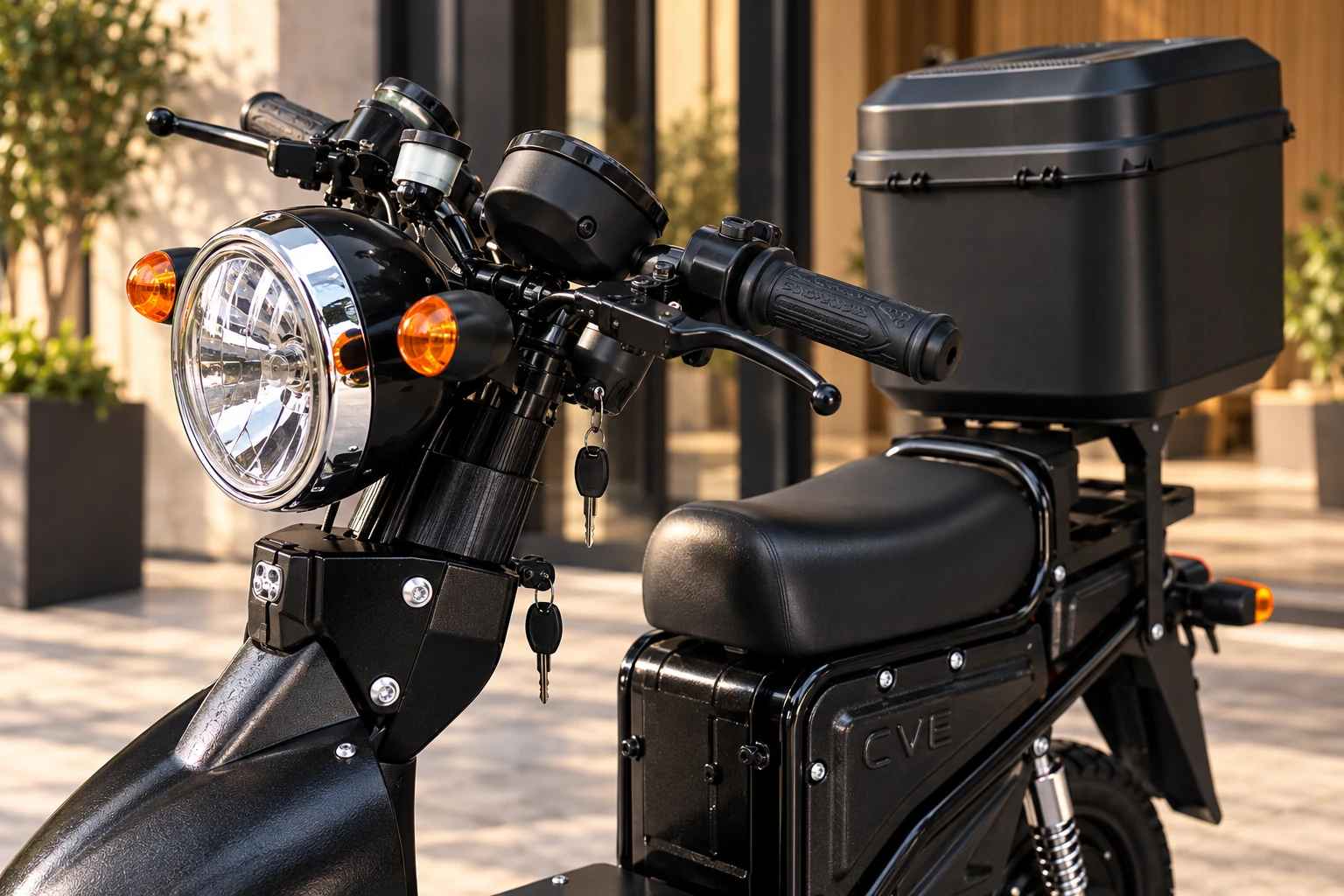
Motorcycles and scooters play an essential role in the fast-growing delivery industry. From food delivery and grocery services to e-commerce logistics, reliable two-wheeled transportation helps businesses operate efficiently in busy urban environments.
As fuel prices, maintenance expenses and operating costs continue to influence purchasing decisions, electric delivery scooters are becoming an increasingly attractive alternative to conventional petrol-powered motorcycles.
With their potential for lower energy costs, quieter operation and reduced mechanical maintenance requirements, electric scooters offer practical advantages for professional couriers and delivery businesses.
But how do you choose the right electric delivery scooter? What should you consider before making a purchase?
In this guide, we explore the most important factors to evaluate when choosing an electric motorcycle or scooter for delivery operations.
1. Choose the Right Battery Range for Your Daily Deliveries
One of the most important factors when buying an electric delivery scooter is its driving range.
The distance you travel each day directly affects the battery capacity and vehicle specifications you need.
For example, a courier making short-distance neighborhood deliveries may have different requirements from a rider covering multiple districts throughout the day.
Before choosing a model, consider:
- Your average daily travel distance
- Frequent stopping and starting in traffic
- Road gradients and urban driving conditions
- Rider and cargo weight
- Weather conditions and riding habits
- Available charging opportunities during working hours
Important: Manufacturer range figures are often measured under specific test conditions. Actual riding range may vary depending on load, speed, terrain, temperature and driving style.
Rather than focusing only on the advertised range, choose an electric scooter that meets your real-world operational needs.
2. Evaluate Battery Capacity and Charging Time
The battery is one of the most important components of an electric motorcycle.
Battery capacity determines how much energy the vehicle can store, while charging time affects how quickly it can return to service.
For professional couriers, charging efficiency can have a direct impact on daily productivity.
Before purchasing an electric delivery scooter, ask the following questions:
- What is the battery capacity in kWh?
- How long does a full charge take?
- Does the scooter support fast charging?
- Is the battery removable?
- What warranty coverage is provided for the battery?
- Is battery replacement and technical support available?
For riders working long shifts, charging time should fit their daily operating schedule.
A scooter with suitable battery capacity and convenient charging options can help minimize interruptions during deliveries.
3. Check Payload Capacity and Cargo Compatibility
A delivery scooter must safely carry more than just its rider.
Delivery bags, insulated food boxes and commercial packages add weight and can affect handling.
This makes maximum payload capacity an essential consideration.
When comparing electric courier scooters, evaluate:
- The combined weight of the rider and equipment
- The average weight of delivery packages
- Compatibility with rear cargo boxes and racks
- Vehicle stability when carrying loads
- Manufacturer-approved loading limits
Exceeding the recommended payload capacity may negatively affect handling, braking performance and overall safety.
For professional delivery operations, choosing a vehicle designed to accommodate commercial cargo is particularly important.
4. Consider Motor Performance and Hill-Climbing Ability
Urban delivery routes are not always flat.
In cities with steep roads, frequent traffic stops and changing road conditions, motor performance plays a significant role in everyday usability.
Electric motors can provide strong torque at low speeds, which can be useful when accelerating from a stop.
However, actual performance depends on several factors, including:
- Motor power and torque
- Battery output
- Controller configuration
- Vehicle weight
- Cargo load
- Road gradients
If possible, test the scooter under conditions similar to your regular delivery routes.
This will help you assess acceleration, handling and hill-climbing performance before making a decision.
5. Compare Energy Consumption and Operating Costs
One of the potential advantages of electric delivery scooters is their lower energy cost compared with petrol-powered alternatives.
While conventional motorcycles require petrol, electric scooters use electricity to recharge their batteries.
You can estimate the energy cost per 100 kilometers using this formula:
Energy cost per 100 km = Electricity consumed per 100 km (kWh) × Electricity price per kWh
For example, if an electric scooter consumes 5 kWh per 100 kilometers and electricity costs TRY 4 per kWh, the estimated energy cost would be TRY 20 per 100 kilometers.
This is an illustrative calculation, not a verified consumption figure or current electricity tariff.
Actual costs depend on energy consumption, charging losses, electricity prices and operating conditions.
For businesses, it is also important to calculate the total cost of ownership, including:
- Initial purchase price
- Electricity expenses
- Maintenance and servicing
- Tires and brake components
- Insurance
- Battery replacement, if required
- Vehicle downtime
Evaluating all these factors provides a more realistic comparison between electric and petrol-powered delivery vehicles.
6. Research Maintenance Requirements and Service Support
Electric motorcycles generally have fewer internal combustion engine components.
For example, they do not require conventional engine oil changes.
This can reduce certain routine maintenance requirements.
However, electric scooters are not maintenance-free.
Important components that still require regular inspection include:
- Brakes
- Tires
- Suspension
- Electrical connections
- Battery condition
- Lighting and safety equipment
Before purchasing, research the manufacturer's technical service network, spare parts availability and warranty conditions.
Reliable after-sales support is particularly important for professional couriers who depend on their vehicles for daily income.
7. Prioritize Riding Comfort and Ergonomics
Professional delivery riders often spend several hours a day on their motorcycles.
As a result, comfort and ergonomics should be part of the purchasing decision.
Pay attention to:
- Seat comfort and height
- Handlebar position
- Riding posture
- Suspension performance
- Vehicle balance
- Ease of maneuvering in traffic
A comfortable riding position can improve the overall experience during long working hours.
Whenever possible, take a test ride to determine whether the scooter suits your height, riding preferences and daily requirements.
8. Review Warranty Terms and Legal Requirements
Before buying an electric delivery motorcycle, carefully review the vehicle's documentation, warranty coverage and applicable legal requirements.
Licensing, registration, insurance and other obligations can vary depending on the vehicle's classification, power and technical specifications, as well as the country in which it is used.
If the scooter will be used commercially, confirm whether professional delivery operations are covered by the manufacturer's warranty.
A purchasing decision should consider not only price but also long-term reliability, legal compliance and after-sales support.
Who Should Consider an Electric Delivery Scooter?
Electric delivery scooters can be a practical option for businesses and individuals involved in urban transportation.
Common applications include:
- Food and restaurant delivery
- Grocery and supermarket delivery
- E-commerce parcel distribution
- Local courier services
- Corporate delivery fleets
- Everyday urban commuting
The right electric scooter can provide a convenient and potentially cost-effective solution when its specifications match the intended workload.
Discover Electric Delivery Scooters with Motowatt
Choosing the right electric delivery scooter requires a balanced evaluation of range, battery performance, charging time, payload capacity, comfort and operating costs.
At Motowatt, we focus on electric mobility solutions designed to support modern urban transportation and delivery requirements.
Explore our electric motorcycle models, review their technical specifications and compare available options to find a solution that suits your needs.
Explore Motowatt Electric Motorcycles
Frequently Asked Questions
How far can an electric delivery scooter travel on a single charge?
The range depends on battery capacity, vehicle efficiency, rider weight, cargo load, terrain, temperature and riding habits. Always check the specifications of the model you are considering.
Are electric delivery scooters cheaper to operate?
Electric scooters may offer lower energy expenses and reduced maintenance requirements in certain areas. However, total operating costs depend on purchase price, electricity rates, usage intensity, servicing and battery-related expenses.
Can electric scooters be used for professional delivery services?
Yes, provided the vehicle's payload capacity, driving range, technical specifications and applicable legal requirements are suitable for commercial delivery operations.
Do electric delivery scooters require maintenance?
Yes. Although conventional engine oil changes are not required, components such as brakes, tires, suspension, electrical systems and batteries still need regular inspection.
What is the most important feature of an electric delivery scooter?
There is no single feature that determines the best choice. Battery range, charging options, payload capacity, performance, comfort and service support should all be evaluated together.